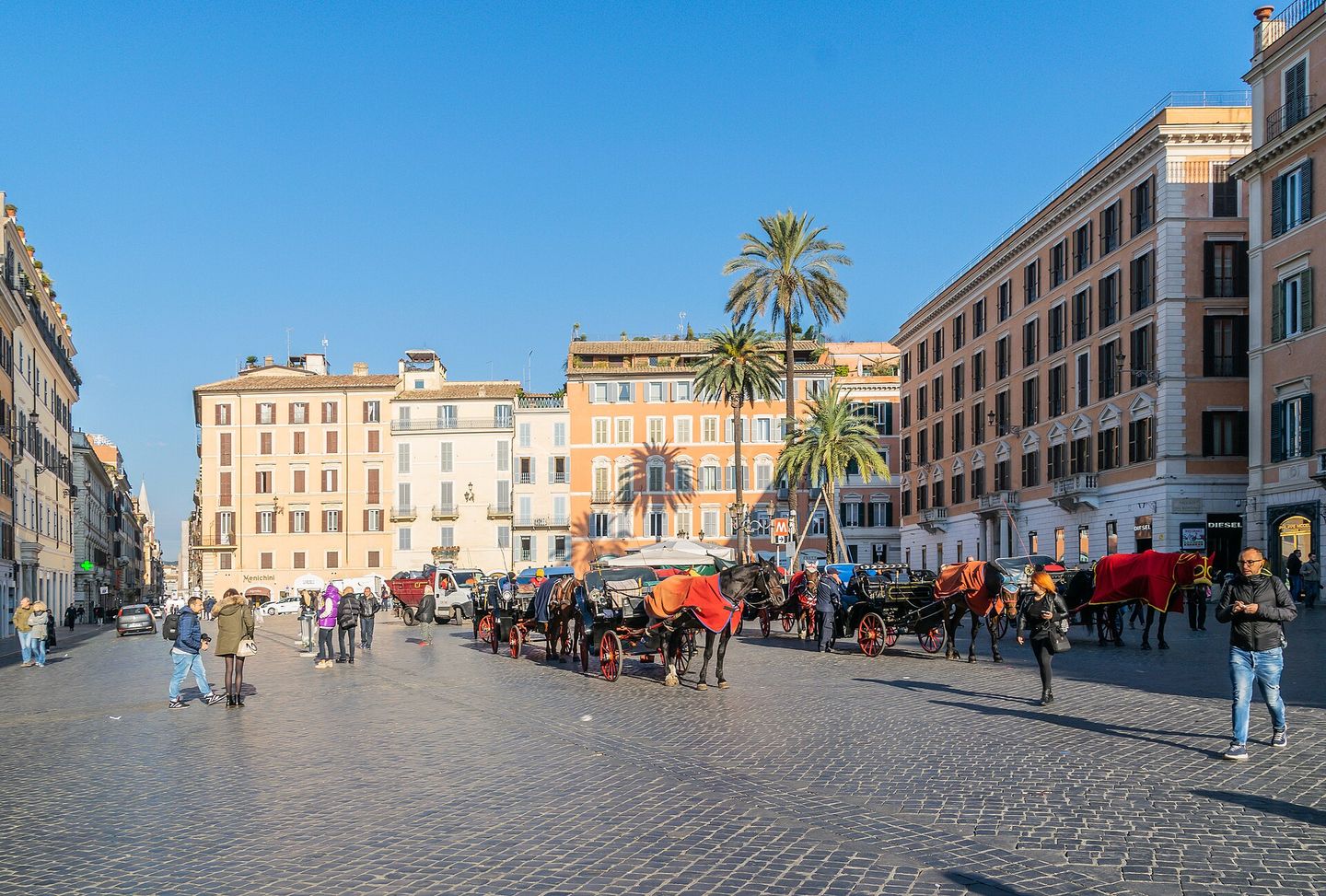
Photo: Krzysztof Golik, CC BY-SA 4.0, via Wikimedia Commons
The walk from Piazza del Popolo to the Spanish Steps is under a kilometre and takes about fifteen minutes without stopping, though you should stop often. It passes an Egyptian obelisk more than 3,000 years old, a church with two Caravaggios, the artists' street of Via Margutta, and ends at the foot of the 135 Spanish Steps.
What is there to see in Piazza del Popolo?
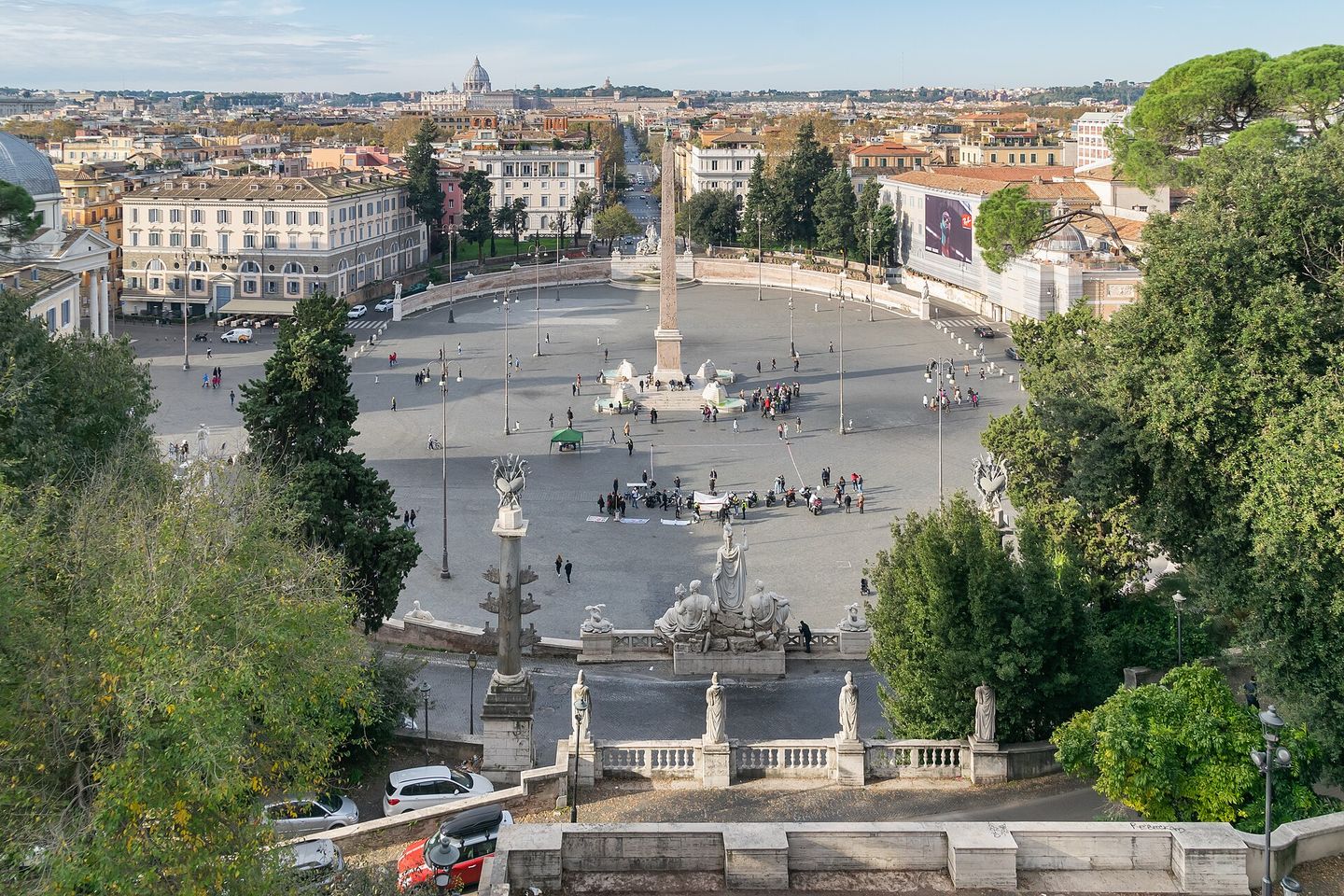
For centuries this was the first sight of Rome for travellers arriving from the north. At its centre stands the Flaminio Obelisk, carved in Egypt, brought to Rome by Augustus in 10 BC and raised here in 1589.
Beside the city gate, the church of Santa Maria del Popolo holds two paintings by Caravaggio and a chapel designed by Raphael. Above the square, a ramp climbs to the Pincio terrace: come back at sunset, when the domes turn gold all the way to St Peter's.
Why walk down Via Margutta?
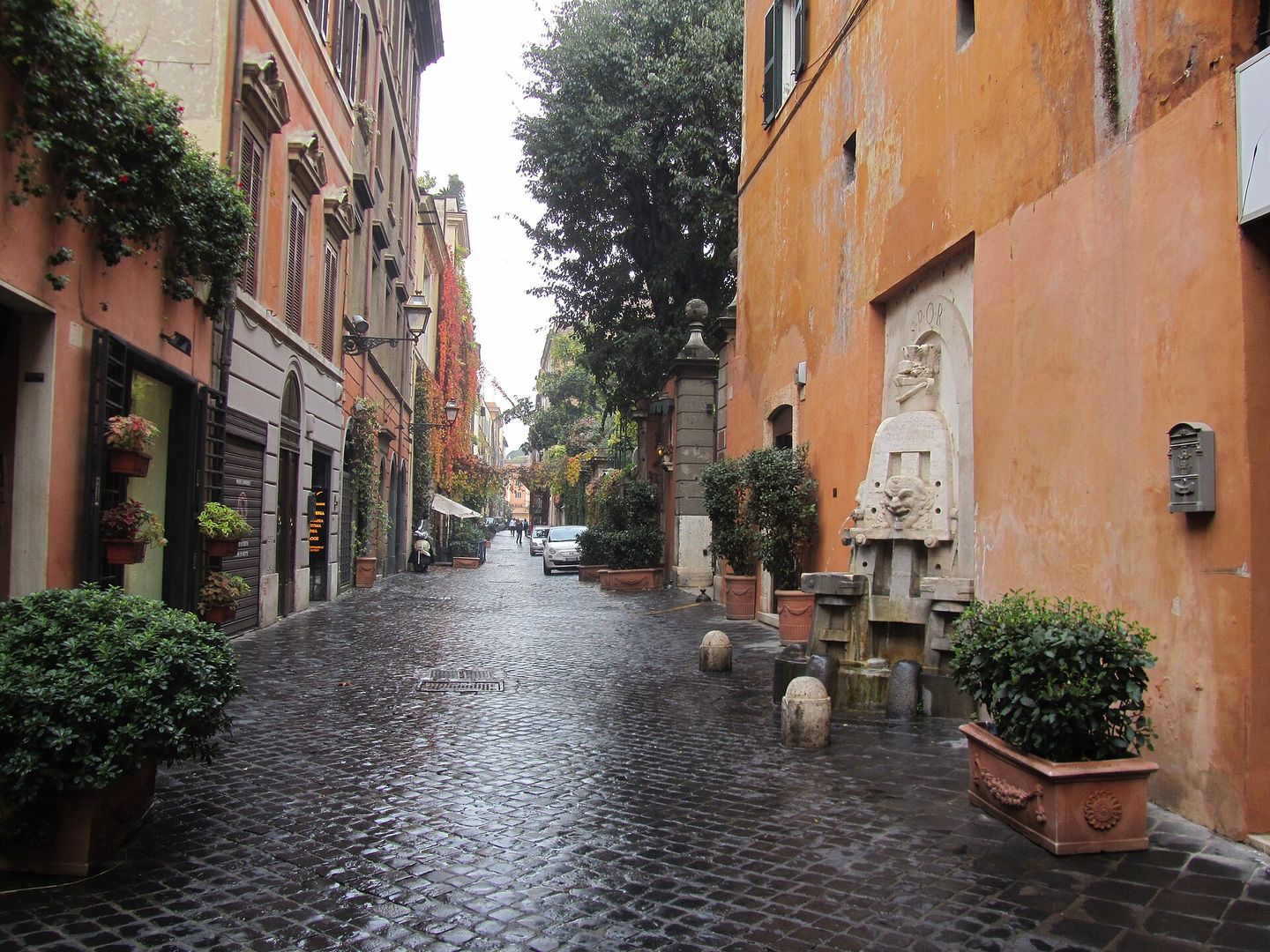
Because it is the quietest beautiful street in the centre. Via Margutta runs parallel to Via del Babuino, a lane of ivy, courtyards and studios that has housed painters and sculptors since the seventeenth century. Federico Fellini lived at number 110, and number 51 is the courtyard where Gregory Peck's character lived in Roman Holiday.
What should you know about the Spanish Steps?
The 135 steps were built between 1723 and 1725 to link the piazza with the church of Trinità dei Monti above. At their foot is the Barcaccia, a fountain in the shape of a half-sunk boat by Pietro Bernini, father of the more famous Gian Lorenzo.
The house to the right of the steps is where John Keats died in 1821; it is now the Keats-Shelley House, a small museum. Sitting on the steps is no longer allowed, so climb them instead: the view from the top is the reward.
Where next?
Via dei Condotti leads straight from the steps towards the river and Campo Marzio, past Rome's great fashion houses. For somewhere to sit down afterwards, see our guide to aperitivo in the centre.
Sources
- Turismo Roma, the city's official tourism site, for monuments and dates